
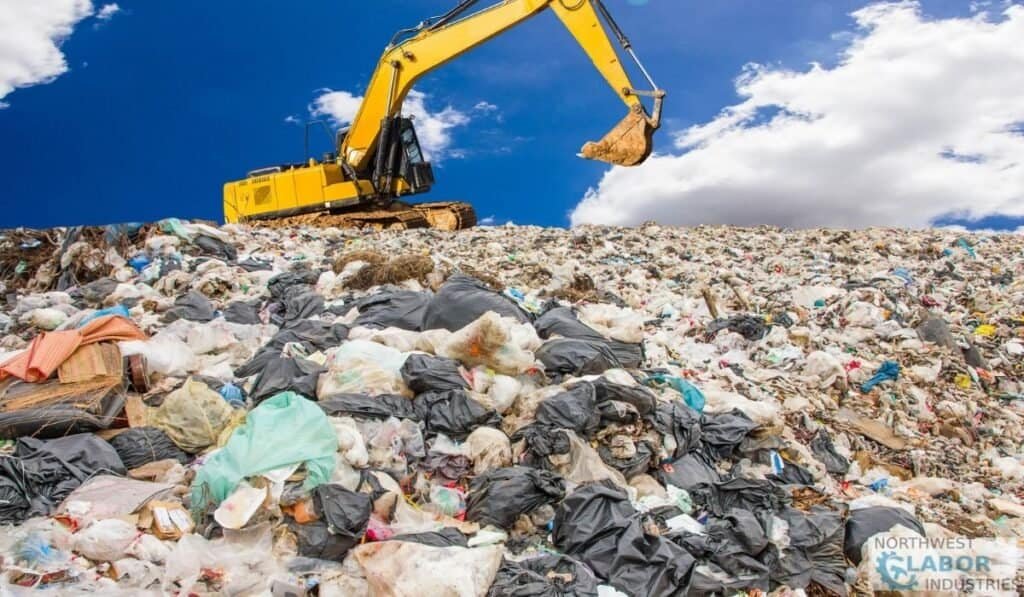
Want to see a number that surprises most people? Food waste makes up about 24% of what goes into municipal solid waste landfills, yet it produces roughly 58% of the methane emissions that escape from them.
These sites also rank as the third-largest source of human-caused methane in the U.S. From our experience, landfill gas carries more than methane, and the neighbors who live closest feel it first.Sounds nasty doesn’t it, and it is.
This article covers the effects of landfills on human health in Seattle, WA, how our air and water are affected, and what Seattle-area households can do about it. You’ll leave with clear facts and simple steps.
This article follows our look at junk removal industry statistics, which put the scale of waste into numbers. The next one covers how to dispose of batteries safely. Our post on the junk removal business ties the whole series together.
Short Summary
- Municipal solid waste landfills can create air and groundwater concerns for nearby residents.
- Landfill gas contains methane, carbon dioxide, odors, and trace pollutants that can affect local air quality.
- Groundwater contamination can become a serious concern when pollutants reach drinking water sources.
- Modern landfill liners, gas controls, and leachate systems reduce risks, but long-term monitoring remains important.
- Seattle-area households can reduce landfill impacts through composting, recycling, donation, and careful sorting before disposal.
Understanding the Effects of Landfills on Human Health
So, what do you think happens to your trash after the truck pulls away? The answer shapes human health in ways that aren’t always obvious. Let’s look the basics.
What Municipal Solid Waste Landfills Actually Hold
A municipal solid waste landfill is a permitted facility built to bury household and commercial trash. It’s different from a transfer station, which only holds waste temporarily before sending it elsewhere.
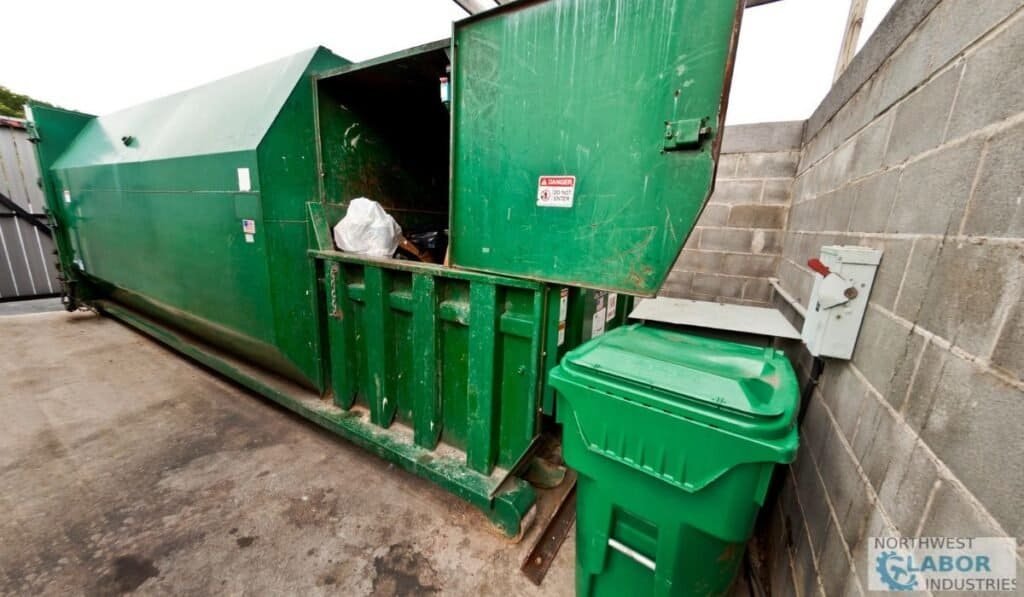
In King County, most garbage goes through one of 8 transfer stations before reaching the Cedar Hills Regional Landfill, the county’s only active landfill.
Seattle runs its own system and ships waste out of the county. Once buried, decomposing waste starts producing gas and liquid. That process happens slowly, underground, and out of sight.
The Three Ways Landfill Pollution Reaches People
Pollution leaves a landfill through three main pathways:
- Inhalation. Airborne landfill gas drifts into residential areas near active sites.
- Ingestion. Contaminated groundwater can reach drinking water supplies.
- Direct contact. Soil and runoff near a site can carry contaminants.
It’s like a slow leak in a pipe you can’t see. The problem builds quietly before anyone notices.
Who Faces the Greatest Risk
Proximity drives exposure. Nearby communities bordering active landfills breathe more emissions. They also face higher health risks from water contamination.
Some groups are more sensitive to the same exposure level, like children and older adults. People with existing respiratory conditions and pregnant women also face greater risk.
Research here is observational. Scientists see associations, not proof of cause and effect. That distinction matters when reading scary headlines.
Book Junk Removal Today!
Why Are Landfills Bad for Air and Water Quality?
Landfills affect air and water through two separate paths. Air pollution comes from gas. Water pollution comes from liquid. Both deserve a closer look.
What’s Actually in Landfill Gas
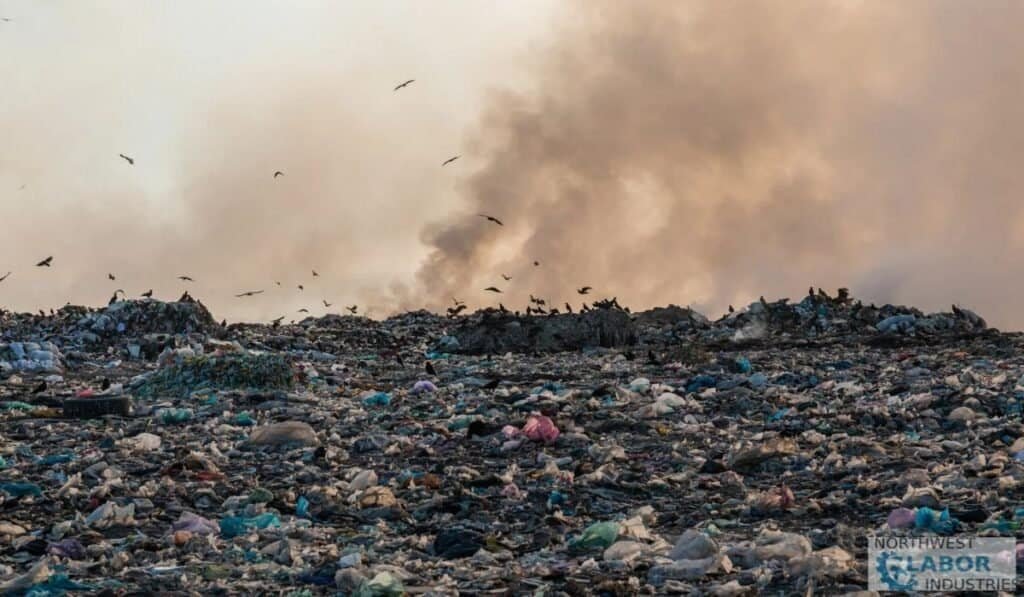
Landfill gas is mostly methane and carbon dioxide. Together, they make up 85% to 99% of the mix. The remaining trace gases drive most complaints from neighbors.
And that rotten egg smell typical of landfills? That’s hydrogen sulfide. Volatile organic compounds are also present, like benzene, toluene, and vinyl chloride. The EPA lists them air toxics.
The Health Effects Residents Report
Short-term exposure to landfill emissions can trigger headaches, nausea, eye and throat irritation, and asthma attacks.
A Missouri health consultation found that sulfur-based compounds near one landfill may have worsened breathing conditions before corrective action is taken.
There are also longer-term health effects that we still don’t know much about. The same consultation noted that estimated cancer risks from breathing VOCs near that site were similar to urban background levels.
Put simply, the evidence suggests that landfill odors and emissions can be bad for your health,, but they haven’t been shown to cause widespread long-term illness when sites are properly regulated.
How Leachate Contaminates Groundwater
Landfill leachate is as unpleasant as it sounds; it’s actually the liquid that drains through buried waste. It picks up heavy metals, dissolved chemicals, and organic compounds on its way down.
And from there, leachate can seep into aquifers and eventually reach drinking water supplies. Water pollution of this kind is slow, silent, and expensive to fix. What’s alarming is that contamination may go undetected for years.
Do Modern Liners Solve the Problem?
Newer landfills under Subtitle D rules must use composite liners, leachate collection systems, and gas capture equipment. These requirements cut risk substantially compared to older or unlined sites.
But they don’t eliminate it. Liners degrade over time, and seams can fail. The waste outlasts the containment by decades.
What Is One Negative Effect of Landfills?
Every disposal method carries tradeoffs and landfills are no different. We’ll walk through the single biggest risk, then look at the full balance sheet of pros and cons.
The Single Most Serious Risk
The most serious negative effect of landfills is groundwater contamination. It ranks highest because it’s the hardest to detect early. It’s also the slowest to reverse, and the most expensive to fix once it reaches a drinking water source.
Leachate carries dissolved chemicals and heavy metals downward over decades.
That lag time makes early detection difficult. A 2026 review found that lead consistently contaminates groundwater near landfill sites, while a 2024 study suggested that dermal exposure to organic pollutants may have been underestimated in past risk assessments.
Most of these contaminants cannot be seen, smelled, or tasted. And by the time monitoring detects them, the contamination plume may have traveled far from the original site.
Pros and Cons of Landfills
It helps to see the whole picture. Landfills serve a purpose in modern waste systems, flaws and all. Here’s the tradeoff in plain terms:
| Benefits | Drawbacks |
| Centralized, regulated disposal | Permanent land loss |
| Landfill gas-to-energy recovery | Ongoing greenhouse gases |
| Lower cost than alternatives | Groundwater contamination risk |
| Engineered containment standards | Hazardous waste leakage |
| Handles non-recyclable waste | Long-term monitoring obligations |
The benefits explain why landfills remain part of the system. The drawbacks explain why reducing what gets buried matters. Every ton diverted eases pressure on all five problem areas at once. That math works in your favor.
Engineered Landfills vs. Open Dumping
A lot of scary landfill claims blur an important line. Regulated U.S. facilities operate under strict standards for liners, leachate collection, and gas capture. Open dumping involves none of that. Waste sits in the open with no controls over what enters or what escapes.
That distinction matters when you see alarming statistics from other countries. A study about unlined dumpsites abroad doesn’t describe Cedar Hills or any permitted facility in Washington.
Sanitary landfills outperform open dumping by a wide margin . Engineering doesn’t make landfills perfect. It does make them a different category of risk.
Reducing Landfill Waste in Metro Seattle
There are coming policy changes that can affect us in the Metra Seattle area. Here’s where household choices can help. So what do you need to know?
Washington’s 2027 Organics Collection Requirement
Washington set a goal to reduce organic materials sent to landfills by 75% by 2030, measured against 2015 levels. The nearer deadline affects you directly.
Starting January 1, 2027, jurisdictions with 25,000 or more residents must offer organics collection to all residents, at least biweekly.
If you live in Seattle, Bellevue, Kent, Renton, or another sizable city, that service is coming to your curb. The Washington Department of Ecology’s organics management page has the full breakdown. Check with your city about enrollment timing.
Why Food Waste and Yard Trimmings Matter Most
Without oxygen, buried organics break down. And instead of simple decay, that process produces methane.
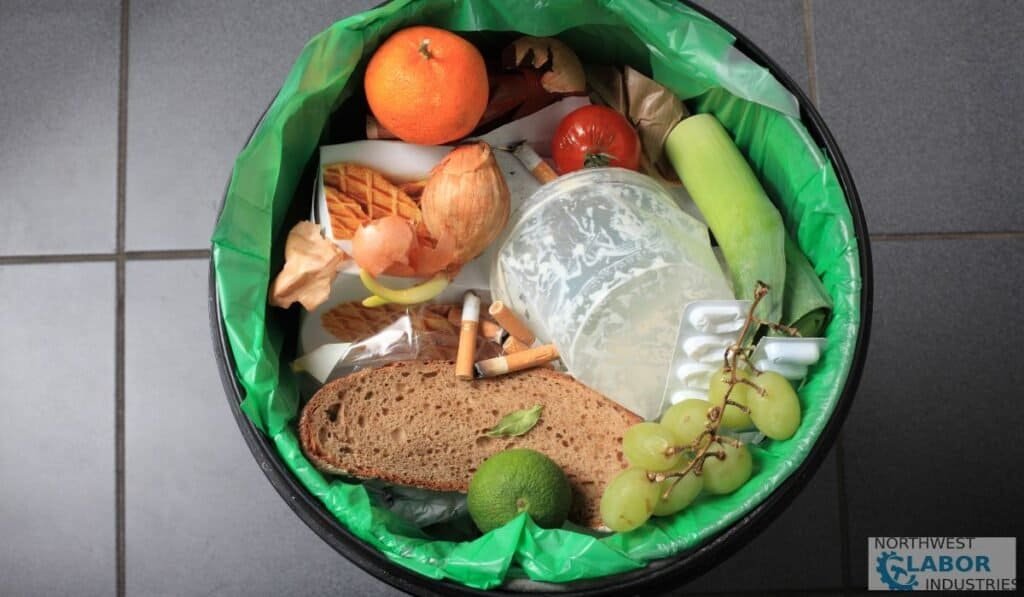
Remember the EPA numbers from earlier? Food waste is about 24% of what’s buried but drives roughly 58% of the methane. The imbalance is huge, and it points to a clear lever for households.
Practical Ways Households Can Divert Waste
- Enroll in curbside composting. Most Seattle-area providers now accept food scraps, napkins, and yard trimmings in the same bin.
- Watch recycling contamination. Greasy pizza boxes and plastic bags jam sorting equipment. When in doubt, throw it out.
- Donate usable furniture and appliances. Charities like Goodwill and Habitat ReStore accept working items. A truck bed full of usable goods should not become landfill waste.
- Route hazardous items properly. Batteries, paint, and electronics need special drop-off. King County runs household hazardous waste facilities for exactly this purpose.
- Sort before a bulk haul. A quick pass separates donatable, recyclable, and trash items before anything leaves your driveway.
From what we’ve seen, a little upfront sorting keeps reusable material out of regional facilities. That single habit pays off twice.
Ready to haul smarter? Northwest Labor Industries routes recyclable and donatable items away from the landfill whenever possible. See how our eco-friendly hauling and recycling process works.
Final Thoughts
The effects of landfills on human health come down to two pathways: what you breathe and what you drink. Nearby communities face the highest exposure, and the risks build slowly over time.
That’s why public health researchers keep watching these sites closely.
Households hold one clear lever. Reduce what gets buried in the first place. Every item diverted from the landfill lowers demand on the whole system.
For Seattle-area readers, we suggest a simple approach. Sort before you haul. Set aside donatable furniture, working appliances, and recyclable materials. Then choose a service that routes those items toward reuse instead of defaulting everything to the landfill.
Northwest Labor Industries takes that approach on every job, and you can learn more about our eco-friendly hauling and recycling process on our homepage.
Small choices add up. A little sorting today supports zero waste goals and keeps useful material in circulation. That’s a win for your recycling efforts and for the communities living near regional disposal sites.