
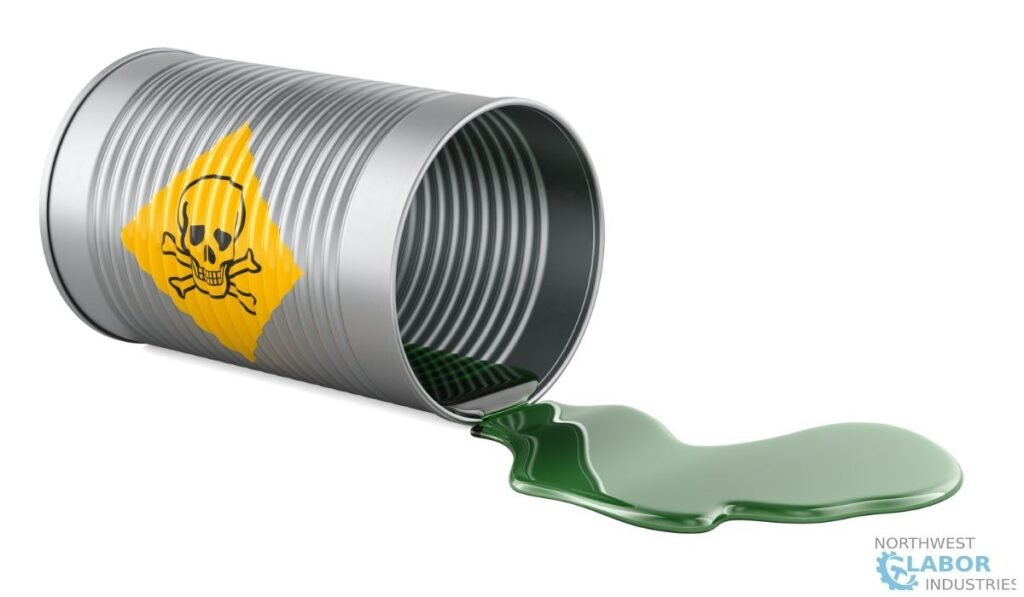
We know the numbers well. More than 2.1 million of us here in King County, plus 60,000 small businesses, produce a lot of toxic stuff every year. Left sitting in a garage or dumped wrong, those hazardous materials can harm our public health and the environment.
From our experience, most residents want to do the right thing. They just need a clear path forward. That is exactly what this guide offers.
We’ll walk you through household hazardous waste disposal in Seattle, WA, showing you where to go and how to do it safely so your waste never becomes a danger to your family, your children, or our beautiful corner of WA.Think of this as part of a bigger conversation. We recently shared how to cut up a mattress for disposal. Later, we will explore ways to recycle at home. And our main guide on household junk ties it all together. For now, let us focus on the hazardous stuff that needs extra care.
Short Summary
- Household hazardous waste disposal in King County keeps homes safer and protects public health
- Common items like motor oil, batteries, and oil-based paints require proper handling
- Use official hazardous waste collection site options or the traveling wastemobile for safe drop-offs
- Prepare your vehicle and pack items correctly to avoid spills and exposure
- Choose safer products and follow good habits to reduce future hazardous waste
What Is Considered Household Hazardous Waste in King County?
Not every half‑empty bottle under the sink qualifies as hazardous waste. But plenty do. We’ve learned this the hard way after hundreds of junk removal jobs where a simple clean‑out turned into a chemistry lesson.
The definition comes down to four key traits:
- flammable
- corrosive
- reactive
- toxic
If a product catches fire easily, burns skin, explodes when mixed with water, or poisons people or pets, it belongs in the household hazardous category.
Definition of Household Hazardous Waste
Hazardous materials show up in places you might not expect.
- That bottle of corrosive drain cleaner under the bathroom sink.
- The toxic weed killer in the shed.
- Old gasoline that has become unstable and dangerous over time.
We call these hazardous products, or simply “haz waste” for short. The rule is straightforward: if the label includes words like “flammable,” “poison,” or “corrosive,” treat it with respect. It doesn’t go in the regular trash.
How to Read a Product Label
The product label tells you everything you need to know. Look for signal words:
- Danger means the product is highly harmful.
- Warning signals moderate risk.
- Caution indicates lower but still real concern.
We always tell our customers to check labels before they even think about safe disposal. A quick read can prevent a nasty chemical reaction in your own trash can.
Cleaning supplies are a prime example. That bright orange degreaser might seem harmless until you spot the danger symbol on the back.
Book Junk Removal Today!
Common Household Items Accepted at Designated Sites
You might be surprised by what we see on a typical drop‑off day. Oil-based paints, paint thinners, and stains top the list. So do motor oil and antifreeze. Batteries of all kinds, especially car batteries, need special handling.
Pesticides and strong drain cleaners are also frequent visitors. One question we hear constantly: what about latex paint? Here’s the good news. Latex paint is accepted only if it isn’t liquid. Dry it out with kitty litter or a commercial hardener, then toss it in the regular trash.
No need to take liquid latex to designated sites unless you want to. For everything else, stick to the official hazardous waste collection locations.
What About Empty Containers?
Empty containers cause a lot of confusion. When is a container truly empty? We use a simple test.
If you can tip it upside down and nothing drips out, it’s ready for recycling or the trash. But if residue remains, treat it as hazardous.
Where to Go for Household Hazardous Waste Disposal in King County (2026 Locations)
Finding a drop‑off spot should be simple. King County makes it that way with permanent sites and a roving service.
Permanent Hazardous Waste Collection Site Locations
King County operates three permanent hazardous waste collection site locations. You’ll find one in North Seattle, another in South Seattle, and a third in Factoria.
There’s also one in Auburn, but the Auburn location is technically a “year-round Wastemobile” stop that operates on weekends only, not a full permanent facility.
Each site is built for convenience. You drive right up to a loading dock, pop your trunk, and trained staff do the rest. No need to lift heavy boxes yourself.
- North Seattle: 12550 Stone Ave N. (Open Sunday–Tuesday, 9 a.m.–5 p.m.)
- South Seattle: 8100 2nd Ave S. (Open Thursday–Saturday, 9 a.m.–5 p.m.)
- Factoria (Bellevue): 13800 SE 32nd St. (Open Tuesday–Friday, 8 a.m.–4 p.m.; Sat–Sun, 9 a.m.–5 p.m.)
- Auburn (The Outlet Collection): 1101 Outlet Collection Way. Located near the Nordstrom Rack loading dock. (Open Saturdays & Sundays only, 10 a.m.–5 p.m.)
Any King County resident can use these locations regardless of which city they live in. Just bring proof of residency and your hazardous waste collection items.
Traveling Wastemobile (2026 Schedule Overview)
If a permanent site isn’t nearby, the traveling Wastemobile has you covered. This roaming service runs from February through October. It stops at different locations across the county, from grocery store parking lots to community centers.
From February through October 2026, the Wastemobile is scheduled for 21 stops, including:
- Redmond: The Home Depot (March & August)
- Vashon: K2 Commons (Late March)
- Carnation/Duvall: Tolt MacDonald Park (April)
- Bothell/Woodinville: UW Bothell Campus (Multiple dates thru October)
You can drop off your household hazardous waste drop items at no cost. We love this program because it brings resources right into neighborhoods. It’s free, easy, and surprisingly fast.
Holiday Closures and Important Reminders
Even the best programs take a breather.
All collection sites and the Wastemobile are closed on the following holidays in 2026:
- New Year’s Day (January 1)
- Independence Day (July 4)
- Thanksgiving Day (November 26)
- Christmas Day (December 25)
Sometimes a site is unable to open due to weather or staffing. A quick online look before you leave saves a wasted trip.
Language Access and Online Resources
King County makes sure everyone can access these services. Their website includes Google Translate for dozens of languages. You’ll find a complete list of locations, hours, and Wastemobile dates with just a few clicks.
We point our customers to those resources because clear access means safer disposal for everyone.
How to Prepare for a Safe Household Hazardous Waste Drop-Off
A little prep work makes the whole trip smoother. We have seen too many folks show up with loose bottles rolling around in the back seat. That is a recipe for stress and toxic fumes. Follow these steps for a quick, safe disposal experience.
Packing Hazardous Products for Transport
- Originals Only: Keep every item in its original containers. If you must use a different container, label it clearly. Staff generally cannot accept unknown or unlabeled hazardous products.
- No Mixing: Never mix hazardous products together. That old gas can with a splash of paint thinner creates an unpredictable chemical reaction. It can be harmful to you and the site staff.
- Check the Seal: Properly seal each lid and check for leaks. If a container is corroding, place it inside a larger, leak‑proof plastic bucket.
Loading Your Vehicle Safely
- The “Zone” Rule: Place your hazardous materials in the trunk or a truck bed. This keeps toxic fumes away from the passenger cabin. If you must use a backseat, crack the windows for airflow.
- Keep it Upright: Secure your items in a box so they do not tip. Use crumpled newspaper or cardboard to fill gaps between bottles of motor oil or pesticides. A stable load protects human health and keeps dangerous spills from happening.
- The Site Flow: When you arrive at the hazardous waste collection site, follow the signs toward the loading area. Staff will direct you to a specific loading dock.
What to Expect at the Site
When you visit a site, the most important rule is to stay in your vehicle. The crew is trained to unload everything directly from your car.
Pop your trunk or open your hatch when instructed. Then relax. Residents are usually in and out in under ten minutes. Easy access means less time handling waste.
Special Access for Disabled Residents and Businesses
- Home Collection Program: If you are a King County resident with a disability or age 65 or older, you may qualify for free home pickup. Disabled residents can call the Haz Waste Help Line at 206‑296‑4692 to schedule an appointment.
- Eligible Businesses: Small businesses (SQGs) can use these sites but must bring two copies of the Business Disposal Form. There is a limit of 220 pounds (about 25 gallons) per visit.
A Critical Note on Transfer Stations
A common mix-up is assuming all transfer stations accept household hazardous waste. Most do not. Locations like Renton, Shoreline, and Bow Lake only take standard garbage and recycling.
Factoria is the only transfer station with a full HHW site attached. Always verify your choice before you leave to avoid being turned away with a car full of chemicals
Beyond Disposal: Keeping Your Seattle Home Safe and Hazard-Free
Getting rid of the old stuff feels great. But what about what stays in your home? A few smart choices now mean fewer trips to the drop-off later.
What HHW Sites Cannot Accept
Even the best programs have limits. Collection sites are unable to take explosives, ammunition, or most electronics. That old TV or computer monitor counts as e‑waste, not hazardous household garbage.
Some items like medical sharps or prescription drugs also have separate disposal routes. Check the county website for a complete list before you pack the car.
Reducing Future Hazardous Waste at Home
We love a good prevention story. Safer products exist for almost every job. Vinegar and baking soda handle most cleaning tasks without the scary labels. For pest control, simple traps often work better than harsh pesticides.
Education around these alternatives protects your environment and keeps harmful chemicals out of your food storage areas. Benjamin Franklin once said, “An ounce of prevention is worth a pound of cure.” He was talking about fire safety, but it fits here too.
Handling Remaining Non-Hazardous Waste
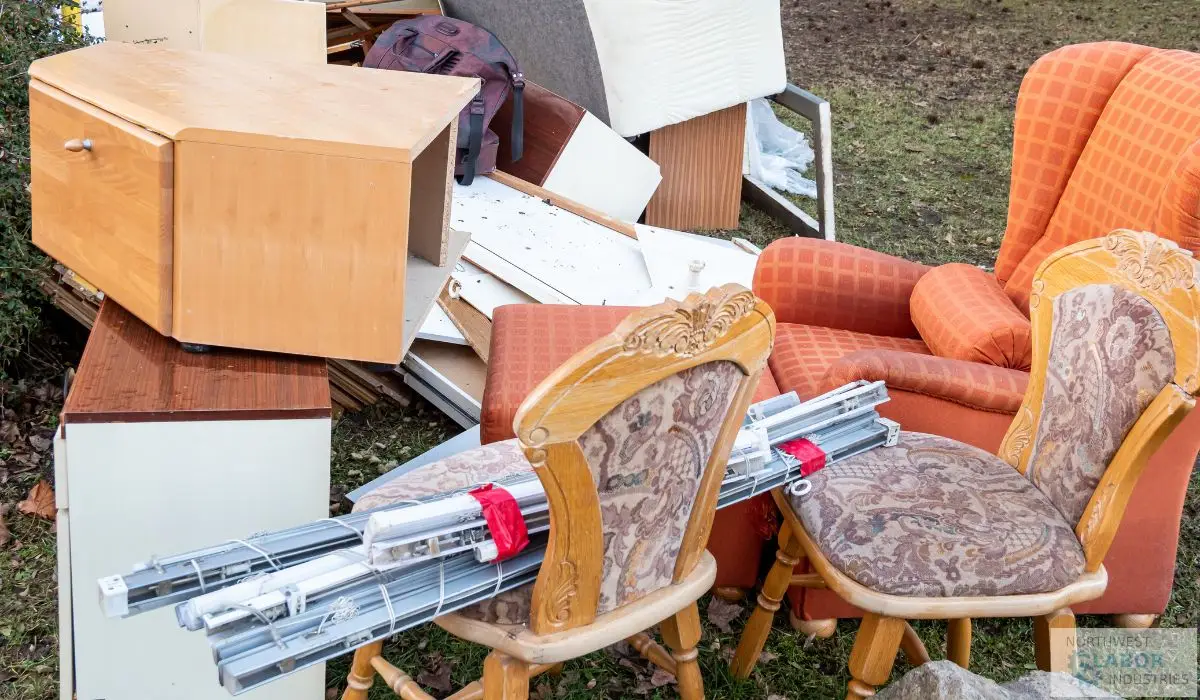
Once you separate the hazardous stuff, you still have the rest of the garbage and recycling. Old furniture, yard debris, and general clutter need a home too. For those items, a professional hauling service can step in.
We recommend Northwest Labor Industries for the job. They handle waste removal with care and help you dispose of everything properly. It is a clean finish to your clean-out project.
Protecting Your Family and Pets
Take a walk through your garage or basement. Look for products that are dangerous to children or pets. Toxic antifreeze tastes sweet but is deadly. Old rat poison left in a corner poses a real risk. Removing these items protects human health and gives you peace of mind. A safer home is a happier home. That is a result we can all celebrate.
Final Thoughts
Getting rid of hazardous waste the right way matters. It protects our environment, our families, and our public health. King County makes safe disposal easy with permanent sites and the Wastemobile.
Use those resources. Make it a habit to check labels and properly dispose of old chemicals before they pile up.
Residents who take a few extra minutes today save themselves bigger headaches tomorrow. You have the tools, now put them to work.
Explore the rest of our homepage for more waste disposal tips. We’re here to help you keep your home safe and your cleanup simple.