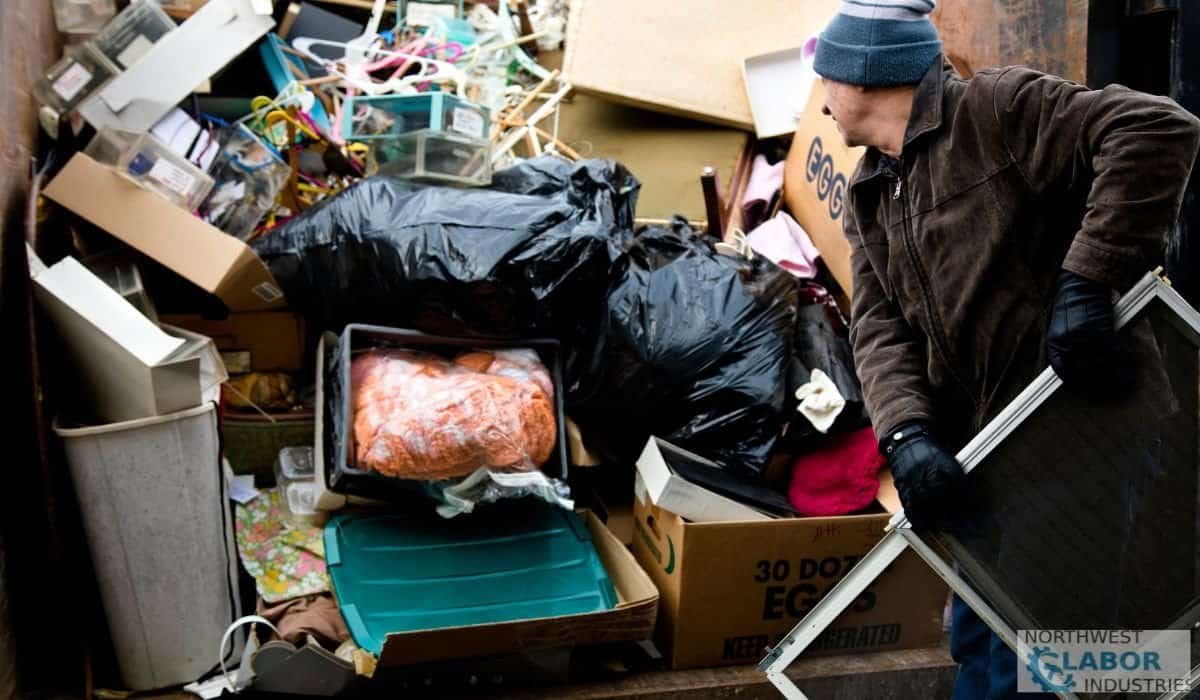


If you’re a Seattle homeowner, you’ve probably stared at a junk removal quote and wondered how the number got so high. Well, from our experience, the confusion usually traces back to one thing: local disposal costs.
King County’s own rate schedule sets self-haul tipping fees at $243.38 per ton, with a $40.25 minimum just to enter a transfer station. Those numbers ripple through every quote a junk removal company in Seattle hands out.
This junk removal pricing guide in Seattle, WA breaks down exactly why, walking through load sizes, labor time, and the fees that catch people off guard. By the end, readers will know how to read a quote instead of just hoping it’s fair.
For curious readers, check out our 10 facts about littering for context on where unwanted waste really ends up. Those planning ahead might also find our roundup of junk removal industry statistics useful for spotting regional pricing trends.
And while you’re at it, check out our junk removal business post for a broader discussion.
Short Summary
- Pricing depends mainly on three things: volume, weight, and access
- Load size tiers range from a single-item minimum to a full truckload, with Seattle rates running roughly $75 to $890 depending on size
- Dense materials like concrete or drywall often shift to weight-based pricing instead of volume pricing
- Stairs, tight hallways, and distant pickup spots add labor time and raise the final cost
- Hourly pricing applies to demolition, sorting, and hoarder cleanouts, where the job scope is hard to predict upfront
- DIY dumpster rental and self-hauling can save money but come with their own fees, permits, and physical effort
- A written quote based on photos is the best way to avoid surprise charges
Calculate Expenses with This Metro Seattle Junk Removal Pricing Guide
You want to know how a clear estimate starts? It starts with a question: how much space will your unwanted items take inside the hauling truck? Most junk removal companies use load size as a starting point, then adjust for weight, access, and special disposal needs.

Understanding Load Size Tiers and Minimum Rates
Those single-item pickups? They usually fall under a minimum charge. A mattress, couch, appliance, or a few boxes may take little truck space, yet the crew still needs to send a truck, load the items, and handle disposal.
For larger jobs, pricing often follows fractional truckload tiers:
- 1/4 load: Small room, furniture group, or several bulky items
- 1/2 load: Garage section, apartment cleanout, or multiple rooms
- 3/4 load: Large cleanout with substantial furniture and debris
- Full load: Major household cleanout or property project
As a practical visual, around six to eight standard pickup truck beds can roughly equal one full 16-foot hauling truck. Actual capacity varies with truck design and how tightly items stack.
For a real Seattle-area reference, published local pricing examples put small loads around $95 to $175, while full trucks can reach $750 or more.
Think about your own appointment this way: a single couch might land near the minimum, while a packed garage could require half or a full truck.
Analyze Key Factors Determining How Much Does Junk Removal Cost
So, how much does junk removal cost for your project? Volume gives us the starting point, but several job details can move the junk removal cost higher or lower.
Evaluating Volume, Weight, Access, and Location
Light household items usually work well with volume-based pricing. But dense heavy items, such as concrete, drywall, brick, or other construction waste, can change the calculation because weight becomes a bigger concern at the landfill.
Access matters, too. A pile beside the driveway takes less effort than the same pile three floors upstairs. Stairs, narrow hallways, long walks through a backyard, and tight gates can add labor time.

And don’t forget location. The travel time across various Seattle neighborhoods can be a huge factor. A short route and easy parking make a crew’s job simpler, while difficult parking or longer travel can affect the estimate.
For example, suppose we quote a garage cleanout with easy driveway access. Then we discover the crew must carry appliances down two flights of stairs. Does that kind of extra work affect the final price? You bet.
A Note on Hazardous Materials and Surcharges
A few materials deserve special attention before your junk removal appointment:
Freon-containing appliances and batteries may carry additional handling or disposal fees.
Hazardous materials may require separate disposal channels rather than regular garbage processing.
King County lists special-waste fees separately from standard garbage rates.
The smart move is to mention unusual materials when requesting your estimate. That gives the hauler a chance to price the job accurately from the start.
Book Junk Removal Today!
Compare Billing Methods: Fixed Volume vs. Junk Removal Cost Per Hour
Most residential pickups use fixed-volume pricing. But some jobs require a different approach. Like hourly rates, for instance. Would this be better for you? Let’s find out.
When Hourly Labor Pricing Applies to Heavy Demolition Jobs
For complex projects, hourly billing comes into play. A demolition job involves more than just hauling stuff away. So, sorting through a hoarder cleanout demands careful work. The crew has to separate trash from personal valuables, and that takes time.
A standard volume quote might not capture the full scope.
The junk removal cost per hour typically covers a two-person crew. The rate includes their time for loading, sorting, and hauling. The clock starts when they arrive and stops when the truck leaves.
One Seattle company charges around $120 to $150 per hour for this setup. A basement demolition could run four hours. A full house cleanout could span a full day.
Ask for a written price quote upfront. A professional hauler will send someone to your property to assess the job. They’ll walk through each room and will likely point out potential challenges.
With a phone estimate, the hourly work is a guess, at best. An on-site price quote protects you from surprise charges.
Evaluate Cost Trade-Offs: Full-Service Hauling vs. DIY Dumpster Rental
Sometimes you want someone else to handle the heavy lifting. Other times, you’re ready to do the work yourself. Both paths have their own cost structures and trade-offs.
Comparing Self-Hauling Tipping Fees Against Professional Convenience
The DIY route starts with truck rental. A pickup from Home Depot runs about $20 for 75 minutes. That’s just the beginning, though. You also pay for gas. You load every item yourself. Then you drive to the transfer station.
The King County disposal fee is $243.38 per ton with a $40.25 minimum entry charge. A half-ton load of old furniture might cost you $162 total with the minimum included. A full ton hits $243. That doesn’t count your time or the physical effort.
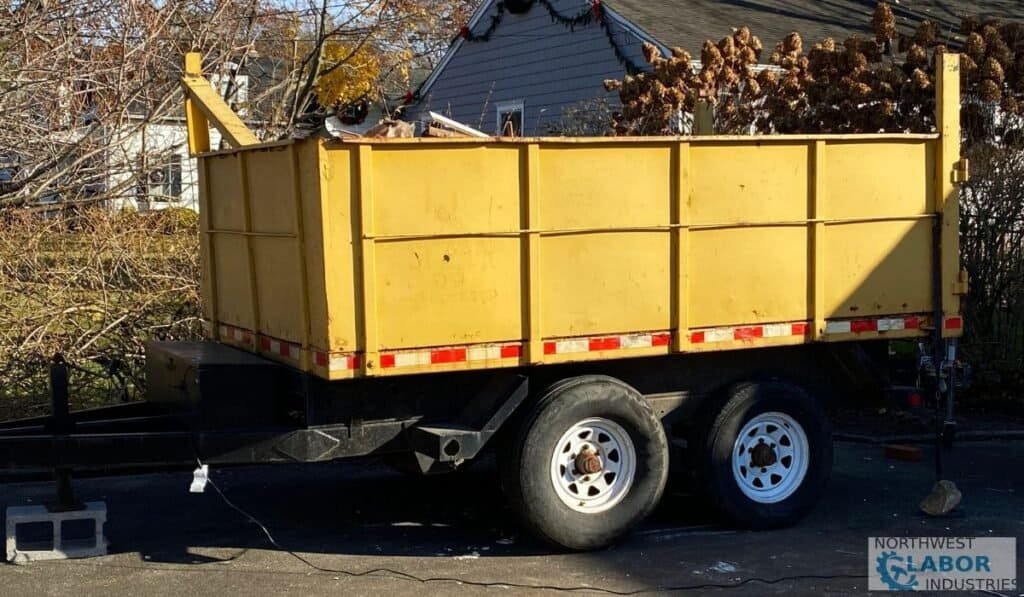
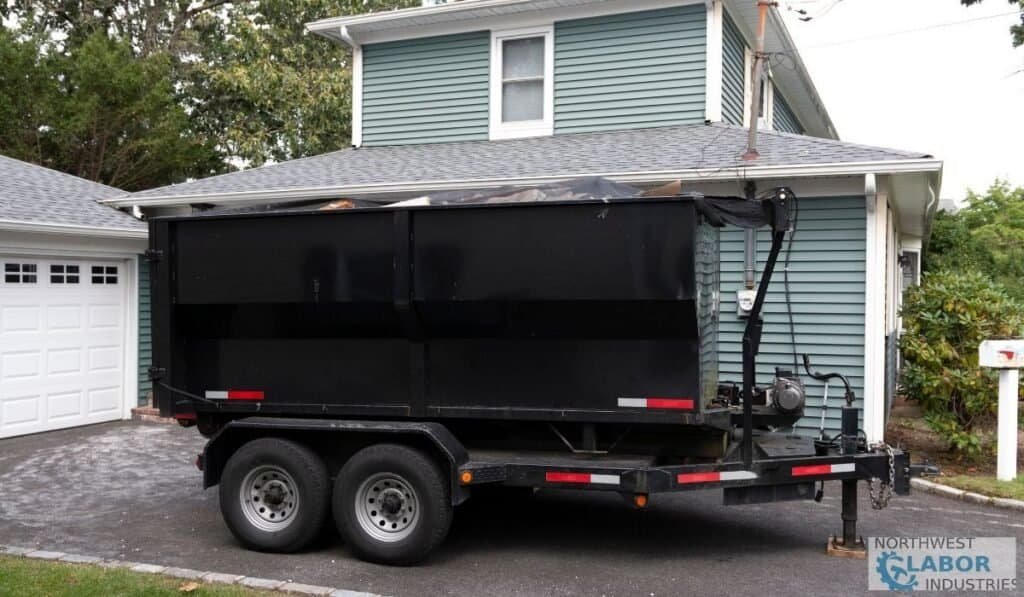
Dumpster rental offers a middle ground. A 10-yard bin costs roughly $350 to $500 for a week. That includes delivery, pickup, and disposal up to a weight limit.
But watch the fine print. If weight is exceeded, then weight overage fees is triggered. Some neighborhoods also require a street permit for the bin. The city of Seattle charges around $80 for a right-of-way permit. And you still do the loading yourself, which can be a workout.
Full-service junk removal services charge one price. They bring the truck, load the heavy items, and what’s more, they sweep up after themselves.
The cost covers labor, transport, and disposal. A basement full of old furniture and boxes might run $400 to $700 depending on volume.
So let’s be real. That’s more expensive than renting a truck and doing it yourself. But does the convenience of showing up and pointing at your stuff justify the premium? That’s for you to decide.
A backyard full of yard waste might be worth the DIY sweat. A waterlogged couch in a basement with narrow stairs? Many folks find they save their backs and weekend by calling a crew. The best choice depends on your budget, your time, and how much you enjoy loading a truck.
Final Thoughts
Pricing for junk hauling comes down to three things: Volume fills the truck, weight drives disposal fees at the landfill, and access affects how much labor time the crew needs. A clear path from the pile to the truck keeps costs lower. Tight stairs or a long carry distance add time.
Before you book that appointment, take photos of everything you want removed. Show those pictures to the hauler. And don’t forget to request a written estimate spelling out the total cost. No verbal quotes, you don’t want surprises on the day of pickup.
Head over to our homepage for a free estimate or to check current pricing benchmarks. Our team quotes real numbers so you know what to expect. Give us a call. See what your project actually costs before you commit.